ChengDu
Chengdu is an old city over 2000 years history,yet,today's Chengdu is full of vitality and energy.It locates in Sichuan Basin,a place with fertile land and nice weather.People have a very pleasant and cosy life since ancient time. It's famous for the slow pace life style,the tea house,yummy Sichuan Cuisine,Massage,Majong,and Panda!!!Chengdu,a place you can really relax!Nice stop for your trip.In a word,Chengdu is a city which will definitely surprise you! |


Panda Base
As China’s National Treasure, the giant panda is one of the rarest animals in the world. The total number is estimated to be 1,500, including those living in the wild, 80% of which are in Sichuan Province. A breeding center for giant pandas was founded in the north suburbs of Chengdu. It is the only one of its kind in the world that's located in a metropolitan area. In order to better protect wild giant pandas, Chengdu has established nature reserves in Dujiangyan City, Chongzhou City, and Dayi County. Sichuan Wolong Giant Panda Nature Reserve, the biggest of its kind in the world, is only 130 kilometers outside Chengdu. The western world came to know giant pandas only after a French missionary named David first discovered this species in Sichuan in 1869.Now, the somewhat clumsy giant panda is a symbol representing the World Wildlife Fund. They are also a messenger of friendly communication between Chengdu and international cities. Currently, giant pandas are also reared in U.S.A, Germany, Austria, Japan, Thailand as well as Mexico. Chengdu has established the world renowned breeding and research base for giant pandas, which attracts almost 100,000 visitors each year. Covering tens of hectares with bamboo groves and a native-like habitat, the base is the only one of its kind located in an urban area. A museum is open to the public throughout the year. Kung Fu Panda 2In 2008, after the release of the American animation movie Kung Fu Panda, DreamWorks CEO Jeffrey Katzenberg and other DreamWorks members visited the city of Chengdu. In addition to seeing live pandas, crew members learned about the local culture. Katzenberg has stated that Kung Fu Panda 2 incorporates many elements of Chengdu in the film. The film's landscape and architecture also found inspiration from those found at Mount Qingcheng, a renowned Taoist mountain. In an interview with Movieline, Berger stated that ‘we never really thought of this as a movie set in China for Americans; it's a movie set in an mythical, universalized China for everyone in the world'. |
Many many VIP and celebrity ,humdinger have been to here.it's highlight for china travel |


Panda Volunteer |
| as panda volunteer is very significant,main actvity is to sweep and clean up panda's inhabitation,make food and feed panda.... |
|
People's Park
People's Park (人民公园), (It located in the west of Tianfu Square which has two blocks between them, 15 mins walking distance.). This park is a important entertainment place for Chengdu citizen. Everyday, especially the holiday, there are many local people in it, that means tourist can find the real leisure life of Chinese old people. They are singing and dancing in separate group, follow the sound you can find them. Some practice calligraphy with water on the floor around a monument in the north-western corner of this park. Some parents take their unmarried children's information here want find potential candidate. There are many tea house in it, local people drink tea and play majong it, TeahouseAn old Chengdu saying goes, "Sunny days are rare, but teahouses are abundant". Teahouses have played diverse social roles in the history of Chengdu. Locals are passionate about going to tea houses, not only for tea, snacks, and entertainment, but also for social gatherings and business meetings. Tea houses have also served as unofficial courthouses where local people resolved conflicts under advisement of community leaders. Traditional tea houses in Chengdu usually feature bamboo chairs and wooden tables and offer jasmine, long jing and biluochun tea. Modern tea houses can be spotted on almost every city corner. The price for tea varies from 5 RMB to several hundred. Besides tea and snacks, almost all tea houses offer Majiang sets, tables, and sometimes separate majiang rooms. Most locals go to tea houses to play majiang with friends. Some luxury tea houses in Chengdu also offer live entertainment such as Sichuan opera shows the average price of one cup of tea is ¥10. There also is a Sichuan snack restaurant Zhong's Dumpling(钟水饺), beside dumpling you can find almost all famous Sichuan snack in it, and with fair price.This park has no entry fee. Panorama view,please search "Chengdu People's park"in www.360cities.net |


Kuanzhai Alley
Kuan (literally means Wide or Broad in Chinese) Lane represents a most typical Chengdu folk culture. At such a lane, you may find local residents, taverns, elaborate door headers, plane trees, old teahouses under house eaves, and the likes-being words or expressions unique to Kuan Lane in Chengdu. Kuan Lane is also reflecting how a city impresses modern people. The old, for example, are drinking tea or chit-chatting at a teahouse gate (apt to drink outside in fine days). What is commonly seen may also be a lazy sleeping cat in a crouching manner, shadows beneath plane trees, and a caged thrush couple amid the tree in some courtyard corner and so on.
Following the Kuan Lane, you may find Old Chengdu Life Experience House, name card and touring center of KuanZhai Lane. This House unveils to visitors the true life of old Chengdu in an all-round way. It also exhibits what an average family goes through in the day during the Republic China period. This is achieved by restoring a courtyards every possible thing such as kitchen, study, central room, and bridal chamber. Visitors may see how the old chit-chatted scores of years ago, how Chengdu girls make Sichuan Brocade as well as other amusements like watching shadow play and puppet show at night, and calligraphy writing show. From the perspective of business services, Kuan Lane provides refinement hotels, private houses drink and food, special local food, leisure teahouses, taverns, business clubs, and SPA-themed services combination zone. Zhai Lane: Old Chengdu Slow Life Zhai (literally means Narrow in Chinese) Lane is characterized by Slow Life of old Chengdu. Chengdu is dubbed Tian Fu (Tian means heavenly granted, and Fu means land of abundance), while Fu is none other than Zhai Lane. The modified Zhai Lane, representing Chengdus courtyard culture, is partly for keeping the cultural relics, and partly for culture enrichment. Courtyard is both heavenly and earthly favored in Chinese culture. Its culture is therefore a combination of elite culture and traditional elegant culture. In a courtyard there are gardens, in which there are houses; while in a house there are courtyards, in which there are trees; above a tree there is the sky, where there is the moonThis is whats expected from a Chinese-style courtyard, as well as what a Zhai Lane life requires. The plants in this Zhai Lane are generally Golden Bamboos and vines. Antique wall lamplights are decorating the streets, close to which are courtyards with show windows that give a miniature of business climate. There are also various Western foods and drinks, take-away, coffees, arts and leisure, healthy living plaza, and special culture-themed fine life zone. Panorama view,pls search"Chengdu Lane"in www.360cities.net |


Uesd to be the old Chengduese living quarter,Sichuan Style folk houses,after renovation,turn into a popular tourist destination with bars,coffee and shops.A good place to experience old Chengdu. |
Green Goat Taoist temple
Green Goat Taoist Temple (very local and tranquil autompsphere)built in Tang dynasty,the most important Taoist Temple in Sichuan.The unique Taoist architectures and tranquil garden give people , a very special feeling compare with all the Buddhist temples.Not so many tourists,most visit by local. Located in the western part of Chengdu, Qingyang Temple (('Green Goat Temple'))is not only the largest and oldest Taoist temple in the city, but also the largest Taoist temple in Southeast China. The only existing copy of "Daozang Jiyao"" a collection of classic Taoist scriptures, is preserved in the temple. According to history, Qingyang Temple was the place where Laozi preached his famous Dao De Jing to his disciple, Ying Xin Panorama view,please search "Goral Palace"in www.360cities.net |


Shu Brocade Institute www.cdbem.cn
Enjoy the title of World Intangible Heritage,it's the only place where still preserve the very traditional skill of brocade Weaving, The big loom work with 10000 silk thread to make the magnificent silk fabric-Brocade.Option: Traditional Chinese Massage http://www.cdutcm.edu.cn/ Experience the authentic Chinese massage which belong to Chengdu Traditional Chinese Medicine University. |


WuHou Temple
Wuhouci Temple (武侯祠), (near Jinli street, south-west of Tian fu square). This temple is built for commemorating Zhuge Liang(诸葛亮 he is minister of Shu(蜀) in Three Kingdoms Period. He is famous through the Chinese novel Romance of the Three Kingdoms There are dozens of dust covered statues of obscure historical figures behind glass and not much else. The gardens are attractive, but not extensive.¥60. Wuhou Shrine (Temple of Marquis Wu) is the most influential museum of Three-kingdom relics in China. It was built in the Western Jin period (265-316) in the honor of Zhuge Liang, the famous military and political strategist who was Prime Minister of the Shu Han State during the Three Kingdoms period (220-280). The Shrine highlights the Zhuge Liang Memorial Temple and the Hall of Liu Bei (founder of the Shu Han state), along with statues of other historical figures of Shu Han, as well as cultural relics like stone inscriptions and tablets. The Hui Mausoleum of Liu Bei represents a unique pattern of enshrining both the king and his subjects in the same temple, a rarity in China. |


JinLi Street
This neighborhood is part of the old city of Chengdu; it features hotels and small stores in old-fashioned style. Antiques are sold in a variety of different stores. It is very popular among both tourists and locals, especially at night, with many bars, restaurants, and nightclubs. You will find a lot of famous local snack food over there, prices ¥1-10. Restaurants and bars in Jin Li are more expensive than outside. There are also antique hotels in there. Some consider Jin Li is to be tourist trap, which is partly true. However, this 'new old street' offers regional and fairly affordable street food specialties as well and can be combined with a visit to the Wuhouci Temple Don't forget to take your camera. Nearby Wuhou Shrine, JinLi is a popular commercial and dining area resembling the ancient-style architecture of West Sichuan . "Jinli" is the name of an old street in Chengdu dating from the Han Dynasty andmeans "making perfection more perfect". The ancient Jinli Street was one of the oldest and the most commercialized streets in the history of the Shu and was well-known throughout the country during the Qin, Han and Three Kingdoms Periods. Many aspects of the urban life of Chengdu are present in the current-day Jinli area: teahouses, restaurants, bars, theatrical stages, handicraft stores, local snack vendors and specialty shops. |


Sichuan Opera
Sichuan Opera. Most guest houses and travel agencies offer to arrange visits to these traditional shows. It is more like a burlesque cabaret than an actual opera, sometimes including magicians, traditional musicians, shadow plays, comedy (spoken in Chinese though), and dancers besides the traditional pieces. Of course the most famous is never omitted: quick face-changing and fire spitting performed by dancers clad in colourful traditional costumes. more of an entertainment.composed of opera, short comedy show, puppet, show, hand shadow, music instruments mimic horse and people conversation, and the face (mask) changing show with fire spitting.... You will follow the story sitting at your table, sipping on your constantly refilled tea cup and nibbling some salted snacks. Note that there are many teahouses in the city that offer the show every night. Try the local favorite at Shu Feng Ya Yun (蜀风雅韵) teahouse located in Chengdu Culture Park (文化公园) on Qintai Road (it is beside Qingyang Temple). You will be seated on a covered open ground (cooled by fan; no A/C), which is actually the center of the traditional teahouse building. You might have to book in advance or just ask the concierge of your hotel to book it .....the duration is 1 hours and half.ticket is about 200-300 RMB |


Hot Pot(Thing to do)
| it's Characteristic local dinner,if you experience and blend with local life,this is right choice,very spicy! |
Happy Vally
Happy Valley (欢乐谷; Huanlegu), (Catch the Number 48 Bus from Luomashi Metro Station to its Terminus then keep walking in same direction once you get off the bus, cross the motorway and the park is on your right hand side), . 09:00 - 18.30. Moderate size amusement park with 3 main roller coasters, Water Rides, Kids zone and water park (in Summer). Overall Good day out for both adults and families, makes a nice break from the city and has enough attractions to fill a full day out, As of 2011 the entrance to the park is now a sports retail outlet, Imax and Indoor Sky diving Centre with Resturants 150 ¥, discount for students. More picture and info,please check our blog: http://www.travelblog.org/Bloggers/pandabase/ |

TianFu Square
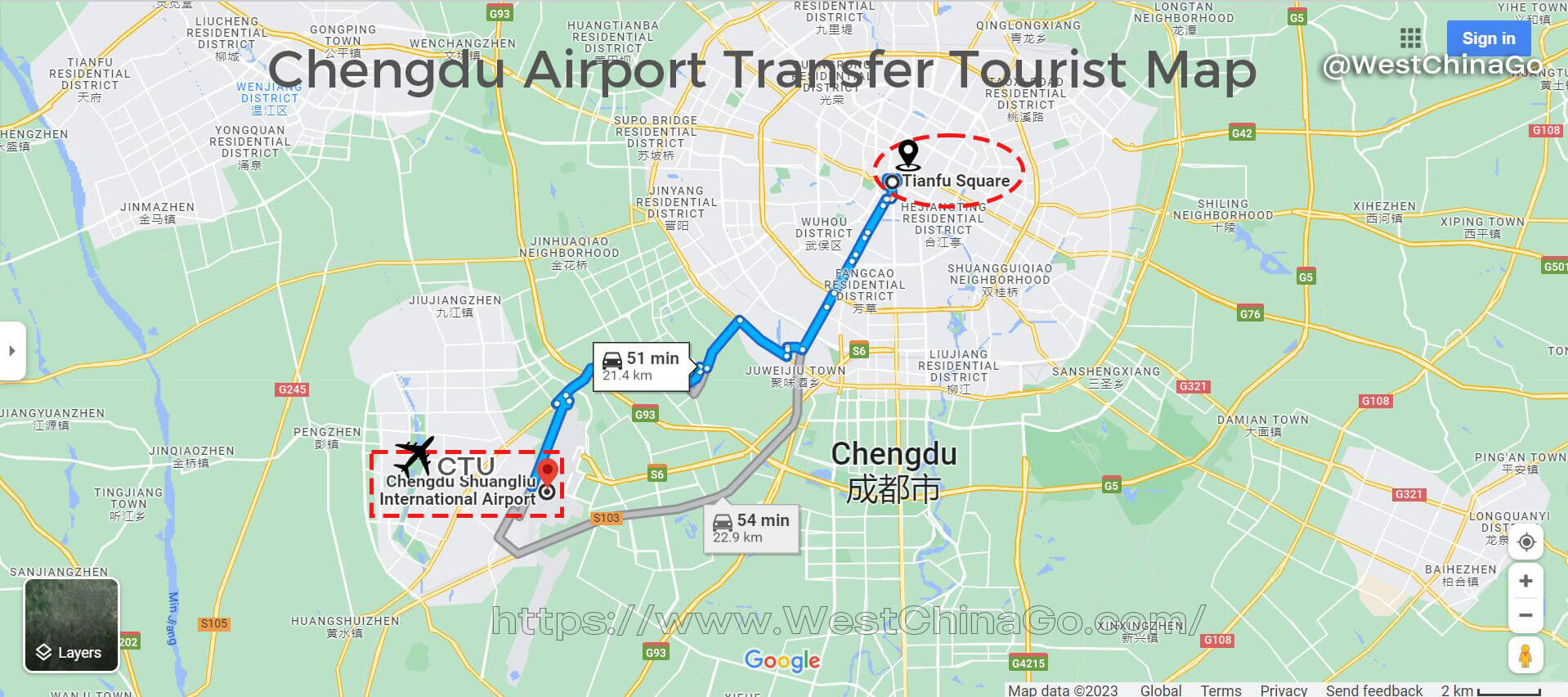
it's central of chengdu city.and symbole of city,like praha sqaure in CZ,This square, overlooked by an enormous Chairman Mao statue in the center of the city, has been spruced up. Every evening at dusk, as well as at noontime, an elaborate water show, synchronized to music, bursts out from the square's fountains. Below the square is the hub of Chengdu's subway system. |

WenSuYuan
This Tang Dynasty Buddhist temple is the most impressive, and perhaps also the most used, temple in Chengdu. It is dedicated to the Buddhist representation of Wisdom, Wenshu Pusa (Manjusri Bodhisatva), and contains more than 450 Buddha statues and other precious relics. it has a history dates back 1,300 years. In addition to the halls and gardens, the temple also has a charming tea house that offers an insightful window of Chengdu life as it is frequented by locals who engage in games of chess, reading, knitting and just chatting with family and friends. The temple also has a delightful vegetarian restaurant with seats offering views over the gardens. Entry fee is a steal at only 5 yuan. |


JinSha Heritage Museum
Jinsha Archaeological Site (金沙遗址), (Take Line 7、14、82、83、96、111、311、401 and 502 and get off at the north of Qingyang Avenue.Take Line 901 and get off at Jinsha Relics Road.), Recently discovered site featuring various tools and art pieces from around 3,000 years ago. The amount of unearthed items is just massive. They include pottery, blades, jade items, building foundations and various golden art pieces. There are two main buildings: the hall constructed over the centre of the excavation site and the modern exhibition hall with various artifacts on display.¥80 http://www.jinshasitemuseum.com/home.asp Jinsha RuinsThe Jinsha Ruins are the first significant archeological discovery in China this millennium and were selected in 2006 as the key conservation unit of the nation. The Jinsha Relics Museum is located in the northwest of Chengdu, about 5 km from downtown. As a theme-park-style museum, it is for the protection, research, and display of Jinsha archaeological relics and findings. The museum covers 300,000 square meters, primarily housing the relics, exhibitions, and a conservation center. The Golden Sun Bird was excavated by archaeologists from Jinsha ruins on Feb. 25, 2001. In 2005, it was designated as the official logo of Chinese cultural heritage by the China National Relic Bureau. The round, foil plaque dates back to the ancient Shu people and is 94.2% pure gold and extremely thin. It contains four birds around the perimeter, representing the four seasons and directions. The center cutout contains 12 beams of sunlight, representing the 12 months. The exquisite design is remarkable for a 3,000-year-old piece. |

Chengdu Travel Guide Info
Chengdu Other Sightseeing |
Dufu thatched cottage,one Of all China's classical poets, Du Fu (712-70 AD) stands aside fellow Tang Dynasty master Li Bai as the best known and best loved. After travels around eastern China and his home province of Henan, Du Fu found himself in the troubled Tang capital of Chang'an (modern Xi'an) where he hoped to establish a career as an official in service of the Tang emperor. The emperor, however, was busy fighting off the forces of rebellious general An Lushan and due to various circumstances, Du Fu's official career was not to be. The An Lushan rebellion, which started in 755 AD, lasted for eight years and, in 760, Du Fu left the capital for Chengdu. Despite the tumultuous times, Du Fu's five-year residence in Chengdu saw him write many of his greatest works. During a time of war and upheaval, his famed thatched cottage gave him sanctuary and inspiration. Over time, Du Fu's work has won him a world-wide reputation as one of China's greatest poets. Even today, poets and artists are inspired by his often simple words. The themes of Du Fu's work are simple, too, though they are steeped in rich and complex ideas. He wrote about his fellow Chinese during years of war and displacement, about politics, nature and everyday life. He often found meaning and beauty in small and incidental things, as in this poem composed while living in Chengdu: Feeling Free I know well my thatched hut is low and small. In memory of the great poet, temples and pavilions were added to the area surrounding his Chengdu cottage during the Song Dynasty. Today, the site—part museum and part shrine—is home to the Chengdu Du Fu Society, a group of local poets who meet regularly. The thatched cottage is a replica and by no means the draw of the park. More intriguing is the brief account of Du Fu's life and examples of his calligraphy and poetry, unfortunately without translation. The park is a very pleasant place to spend an afternoon. Narrow stone paths wind through classic Chinese garden landscaping, past peaceful bamboo gardens, and end in tiny clearning with benches with if you're lucky, a view of flowers in bloom. |
Sanxingdui Museum (Sānxīngduī Bówùguǎn, 三星堆博物馆) sits on an archaeological site now recognized as among the most important in the world.Forty kilometers north of Chengdu, near the city of Guanghan First discovered by a farmer who dug a large piece of jade from the earth in 1929, subsequent excavations have revealed a wealth of relics from the Neolithic, Shang and Zhou periods; evidence that the site has been in use for more than five millenia. Not until 1986 when two large Shang-period sacrificial pits were unearthed that contained more than 1,000 gold, bronze, and jade objects from a previously-unknown Bronze Age culture was the site seared into the contemporary consciousness. A scholar at the British Museum considered the bronze ritual masks in particular to be more impressive than the Terracotta Warriors, and the find upended the oft-repeated theory that the sole cradle of Chinese civilization was in the Yellow River basin. The dig site covers some 12 square kilometers, focused around the "Three Star Mounds" of the name: three earth piles that legend has it were cast down to earth by the Heavenly Emperor. In fact, they mark breaches in the the southern wall of an ancient city. The museum itself opened in 1997, and is divided into four sections, which walk visitors through the history of this early culture (known as Shu), from its early splendor and mysteries to the work of the archaeologists now seeking to unearth their history. Siguniangshan (四姑娘山). Four Girls Mountain is located in the county territory, Qionglai mountains, by the four adjacent Xuefeng, perennial snow, such as four beautiful white fairy standing in the hills, hence the name. Four Girls Mountain and famous male and high, steep mountain, directed at the blue sky, as all mountaineers attention. Chengdu Zoo (成都动物园), (In the north of the city near the Panda Research Base). Offers all the typical animals that one might expect in a zoo (elephant, tigers, giraffes, monkeys, as well as panda bears). While the zoo itself is large and spread out, some of the cages are woefully small and the facility seems understaffed. Might be good for a family to visit. The zoo has vendors selling Chinese snacks as well as some carnival type rides. ¥12 Floraland (国色天香), (Expect an expensive taxi ride out to the suburbs, or take one of the buses that will guide you to the park). The park includes a moderate selection of rides (water, relaxing and thrill), and various recreation activities. Weekends can get packed, so try to go during a weekday. ¥60 Luodai Ancient Town (洛带古镇), Luodai Town, Longquanyi District, Chengdu (Luidai Town is about 25km east of downtown Chengdu. Chengluo (成洛) Road goes directly there. There is also a bus that goes directly there. Catch it at a small building behind the Xinnanmen bus station, right where Shiqi road bends. Cost is ¥7. There appears to be no regular schedule, just show up, and when the bus is full (enough), it departs. No bus number, just look for signs to '洛带'. In Luodai, once you exit the train station, turn right on Bajiaojing street, then left at Huaishui Middle Street, and the entrance is on your left.). Over 1 km long streets with older building (in various states of disrepair) lined with stores. The primary attraction is the many different types of food and snacks available, especially Hakka food, that are hard to find in other places (along with some amount of stores selling standard tourist crap and costumes to rent for photos). The buildings that line the street are of some, but not great, interest; more interesting are a number of older buildings and halls that give one a feel for older China. Signage and shops appear to be Chinese-language only. Entrance: free |
EatSichuan is known for spicy food! This is the spiciest of the spicy. Sichuan cooking has more chilies in it then there is actually food sometimes. Be prepared for everything to burn and rock your world. Just be gentle on the Sichuan Hot Pot () for it is known around the world for being one of the spiciest dishes in China. You will find no shortage of delicious and fiery Sichuan food in Chengdu. Most of the food is quite spicy, be sure to specify whenever you order: non-spicy (不要辣; búyàolà), a little spicy (微辣; wēilà) or 'old' (very) spicy (老辣; lǎolà). If you are not accustomed to it yet, a bottle of sweetened soy, almond, peanut, or cow milk, or something else sweet will work much better than water to quell the fire. If you are used to the hottest of authentic Indian or Thai food, the level of spiciness in Sichuan food should be no problem at all. However, Sichuan food also makes heavy use of Sichuan pepper (花椒; huājiāo), which looks like but is not a true peppercorn, and causes your mouth to become somewhat numb. Sichuan pepper is added in most spicy dishes. If you can eat spicy food but do not like Sichuan pepper, you need to order so (不要花椒; bú yào huājiāo). However, Sichuan pepper (in addition to causing numbing) has an important citrusy taste that it adds to foods and authentic Sichuan tastes bank on the play between the flavours of both Sichuan pepper and chili peppers, and it is strongly recommend you at least try the authentic versions with the Sichuan pepper before deciding for yourself. The spiciest food in Chengdu is hotpot (also called steampot or steamboat), although the tradition originated in Chongqing, so it is not really Chengdu food. Sichuan hotpots are basically a big pot of soup and spices simmering in a hole in the middle of your table. Patrons choose from a large selection of meats, vegetables and other add-ins. Most popular include: lamb, mushrooms, beef, tofu, quail eggs, potatoes and various others (pork, green vegetables, fish balls, carrots, and even pig's brain!) You can choose spicy pot or non spicy pot. With spicy hot pots, unlike eastern hot pots, the soup is NOT for drinking; instead, fish out your cooked items with chopsticks (do not fish the liquid out with a spoon, it is too spicy even for locals to drink; the fished out vegetables will be spicy enough), dip them in the small bowl of oil provided to each person, and enjoy. You may also find the local food too oily or too salty for your taste, and may want to advise your server accordingly. There are also a lot of weird local snack type of food, such as spicy dragon prawns (look like very small crayfish; 麻辣龙虾), spicy snails (香辣田螺), Chongqing duck neck (九九鸭脖子), Bangbang chicken (棒棒鸡), spicy rabbit meat (二姐兔丁). These ones are so delicious and you must try them. But you need to ask a local to take you to the right place. Quite often you will find that the small restaurants and shops offer the most delicious and cheapest food. If you want to find even cheaper food options, street vendors are the way to go (though the Chengdu police have been doing their best to extinguish this long tradition and you may have trouble finding them these days). Serving everything from barbeque (烧烤) to steamed breadrolls(馒头), they are a cheap and offer a great option for a quick bite to eat. If you are less adventurous but still like Chinese food, or just tired of Sichuan food, there are a number of Cantonese and Hong Kong restaurants, including Lei Garden near Shangri-la Hotel.
Budget
Mid-range
SplurgeChinese
WesternChengdu has a few local Western restaurants. Service is always friendly, although you should expect occasional mistakes, such as appetizers served at the same time as your meal. Chengdu is just starting to get accustomed to Western tastes.
Thing To do For up-to-date information on activities, places and attractions you should check out the CHENGDOO citylife magazine's listings. You will find copies in most bars, restaurants, cafes, hostels and hotels.
Drink and Night Life A popular district of bars, also known as the bar street, is located by the southern shore of Jin River next to Anshun Bridge. The well known Lan Kwai Fong from Hong Kong started it's business in the mainland of China in 2010 and the first city is Chengdu. The area is located a little north-west from Anshun Bridge.
Also, on the southern bank of Jinjiang there is a row of bars between Renmin South Road and Xin South Road. Beers will cost ¥10-20 per bottle, but buying bulk cans will save you a good bit of money with special deals. There will also be street vendors selling various snacks. This makes for a good night with the clubs Babi II, Ta & Ta, and Soho just around the bend.
Buy
Supermarkets are located throughout the city, although the selection of imported foods is limited.
Accommodation Budget
Mid rangeThe vast majority of Chengdu's mid-range hotels are not affiliated with a national or international brand and generally charge ¥300-700. The hotels in this category can generally put up the facade of the more luxurious hotels, but often suffer noticeably from deferred maintenance or haphazard customer service. Many are geared mostly towards Chinese and Asian tour groups. The hotels listed below are the best of the bunch with lobby staff who speak at least a basic level of English and usually offer a free Chinese breakfast.
SplurgeChengdu's luxury hotels provide world class service at very reasonable prices. Business and leisure travelers can expect, at a minimum, to find fluent English speaking staff, Western and Chinese restaurants, full conference facilities, business center, sauna and concierge service at all of these hotels. Room rates are US$115-200 per night for a standard or deluxe room. The Kempinski and the Jin Jiang Hotel are generally the lowest price within this category.
Stay Safe Thieves are prevalent around certain areas of Chengdu. Be careful around the Yanshikou markets and especially around the North train station. There are also many thieves on crowded buses who use razors to cut open pockets and bags. Also watch your bag at all times when riding bicycles around the city, thieves like to run alongside bicycles at traffic lights and reach into bags. Traffic can be hectic and motorists as well as cyclists have a complete disregard of pedestrians. Beware when crossing streets; even when the WALK sign is green, traffic taking a free right turn might try to run you over. |
West China Go Travel Service info@westchinago.com Tel:86-13540893980 Fax:86-28-86614419 |
WestChinaGo.com Copyright@2010ICP09008864 All Rights Reserved |